Most students follow the same routine: finish the whole syllabus, revise it a few times, and then take a mock test. At first glance, it seems logical – why test yourself on something you haven’t learned yet? But it doesn’t always work. Students take mock tests when they are already close to the actual test date and there is little time to fix their weak areas or revise their strategy.
Taking mock tests before completion of syllabus is actually one of the smartest things a student can do. Early testing isn’t about scoring high now, it’s about learning how to score better later. And that’s why early mocks change the whole game.
1. Helps You Identify Weak Areas Early
The problem with taking your first mock test after the syllabus is covered is that you get to know about your weak topics when there is hardly any time left to fix them. Starting taking mock tests early, even if you haven’t finished the whole syllabus, will help you to find the gaps in particular chapters or topics when you still have time to go back and work on them.
Instead of finding a shaky topic a week before the test, you find it months before. This means your remaining preparation time is a focused effort instead of a last minute scramble.
2. You get to know the exam pattern earlier
Each competitive exam has its own pattern in terms of type of questions, marking scheme, level of difficulty, time given to each section etc. It is one thing to read about the exam pattern but quite a different feeling to experience it through a mock test.
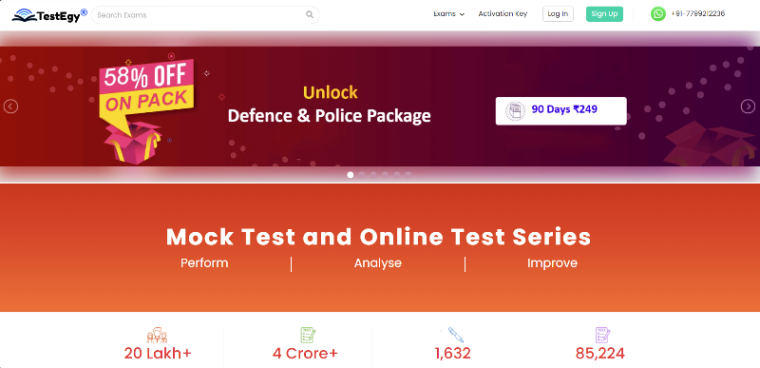
Platforms like Testegy are created specifically for this – so students can have a real-time feel of the exam environment early on, so the pattern doesn’t feel strange when the real test arrives. The sooner you become familiar with the format, the less mental energy you will need to spend adapting to it and the more you can concentrate on your subject knowledge.
3. Practice improves time management
Knowing the syllabus is only half the battle – time management under exam conditions is a skill in itself. Good students often lose marks, not because they don’t know the answers, but because they run out of time or they misjudge how long each section should take.
Doing mock tests before you have completed the syllabus gives you multiple chances to experiment with:
- Time to spend on each question or section
- Knowing when to pass on a difficult question
- How to pace yourself on the entire test
You should already have your time management sorted out as you work your way through your syllabus—not still figuring it out under pressure.
4. It Makes a Smarter Study Schedule
Mock test results are basically a map of where your preparation is going right and where it is not. Take the tests early, and you have this map sooner — and the freedom to revise your study plan around it.
If you discover that you have consistent weaknesses in a particular topic or type of question on a practice test, you can spend more time on it in the coming weeks. This is much better than a fixed study schedule that does not take into account actual performance data.
5. It builds confidence for exam day gradually
Exam-day confidence isn’t derived from last-minute cramming — it’s derived from familiarity. Students who take mock tests early and often are much less likely to feel overwhelmed when the real exam comes around, because they’ve been there and done that many times.
Practicing mock testing early and often helps to lower test anxiety. You understand what you’re up against, you have trained to handle pressure, and you’ve already made – and corrected – your mistakes in a low-stakes setting.
6. Partial Syllabus Mocks Are Still Useful
A common myth is that mock tests only work when you ‘know everything’. But actually, even section-wise or partial-syllabus mock tests are useful. They permit you:
- Test particular chapters right after you complete them
- Active recall to reinforce concepts rather than passive revision
- Make it a practice to regularly self-evaluate in your preparation
This is where a structured mock test series, like those offered by Testegy, can be especially useful, allowing students to test in phases, rather than waiting for one large test at the end.
Final Thoughts
It is a good habit to break to wait for the syllabus to be “complete” before taking mock tests. Regular and early testing helps you identify weak areas earlier, understand the exam pattern faster, sharpen your time management and build a preparation strategy based on real performance – not guesswork.
Don’t think of mock tests as the final checkpoint but as an ongoing part of your preparation. Begin early, test often, and let each practice test inform the next phase of your study plan.